We have an extremely small, local library that we've gone to every week this summer, which inhabits a very tiny building that is run entirely by volunteers and donations. They have a wonderful kids' section, but the adult section looks eerily like your 80-year-old grandmother cleared out all the books she bought in the 1980s and hadn't read. The "Literature" section in the kids' department is pretty good, and is also about 90% John Steinbeck. Since living in California, I've realized that everyone raised here became inundated in Steinbeck from school, and yet I can't remember reading one of his books. At some point in my life I'd read multiple good quotes from Travels with Charley, so I thought I would give it a try, and it was excellent! I followed that up with a collection of his short stories in The Long Valley, and finally decided to go for the plunge and read Grapes of Wrath.
To paraphrase another author: "It was the best of books, it was the worst of books." I've entirely fallen in love with Steinbeck's ability to describe characters and tell a good story. He really likes his characters, and it shows. The one-eyed junkyard supervisor is one of my personal favorites. However, there is definitely some heavy-handed political statements he's trying to make with the story that get oppressive and trite with repetition. There is no way that one Okie family could encounter every possible event of the Dust Bowl, and the sentimentalism of it is too much for such a good writer.
Steinbeck's genius can be found in how many times he's been copied over the last 80 years. It seemed that writers as far apart as Tom Wolfe and Wallace Stegner have copied aspects of his style. In fact, Stegner is extremely similar, but has even less hope for his characters' unhappy endings than Steinbeck does.
Steinbeck certainly wasn't a happy character himself--he drank and partied his way through college (which he didn't finish), his first wife was an active Communist who had an abortion because Steinbeck thought being a father would inhibit his writing career. He neglected his second wife and children, and was possibly happiest with his third wife. It sounds as though he enjoyed the company of the characters on the page more than those that inhabited his house. However, his skill is amazing, and I'm looking forward to a visit to the National Steinbeck Center, which is about 20 minutes from my house.
Saturday, August 4, 2012
Wednesday, August 1, 2012
From Alfred to Victoria
Both ancient Hebrew and classical
concepts of rural life came together in the founding of the United States. As many as 90% of the earliest
colonists from England were Puritans of the yeomen class, which consisted of free landowners. This class of English commoners had been raised under
the 1,000-year-old English common law written by King Alfred in the 700s A.D.,
who modeled his private property laws on the Hebrew Old Testament. They were educated by John Wycliffe and William Tyndale who sought to educate the common farmer by widely distributing the Scripture in the vernacular language. These Reformers arrived in the New
World with their thirst for religious freedom, as well as English property law
engrained in their hearts and minds.
Thomas Jefferson, the son of Puritans as well as the Enlightenment,
wanted to institute the agrarian ideals of liberty that were espoused by both
John Locke and the French Revolutionaries, who took their cues from the
classical agrarian revolutionaries.
Jefferson believed that the key to democracy and a moral society lay in
the equal distribution of property, and even tried to include such requirements
in the Virginia State Constitution.
He found a kindred spirit in James Madison who incorporated agrarianist
ideals at the Constitutional Convention, into the Bill of Rights, and in the
building of Washington, D.C.
However, the 19th century saw the beginnings of a break in this ancient, long-standing relationship between productive land ownership and civil rights. The Industrial Revolution created a society that, for the first time in history, did not have to exist just at or barely above subsistence. The factory, instead of the home, became the focus of productivity. Husbands desired the steady paycheck of a factory job, while their wives (who had both servants as well as modern, industrial conveniences), had to justify their lack of productivity in the home. This situation created Victorian society, wherein the home was transformed into a place of consumption, not production. In addition, the Romantic Movement reacted to the Industrial Revolution by hailing the beauty of wilderness and naturalism. The Romantics discouraged farming, viewing it as an activity that imposed upon the inherent beauty and function of nature. In addition, the creation of the U.S. Department of Agriculture during the Civil War placed more constraints on small, family-owned farms to be financially viable, leading even more farmers to abandon the work of their ancestors and move to the cities.
Saturday, July 28, 2012
Agrarian Ideas
I've been doing some reading and thinking about agrarianism, and thought I would post a bit of it.
The classical world also had a high view of farming, but one with more revolutionary connotations. The Greek poet Homer spoke of farmers in exalted terms and only barbarian monsters, like the Cyclops, did not farm (Odyssey IX. 113-124). Hesiod, another Greek poet of the same period, says that only warriors, or “Men of Ares” do not work for their bread and that the gods look more kindly on those who make their living from the soil (Works and Days 147). The Romans, under the tribune Tiberius Gracchus, enacted forced land re-distribution, giving the government the right to take land from the wealthy and re-distribute it amongst free Roman citizens. This law was called lex sempromia agraria and is where our term “agrarianism” originated, along with its socialistic connotations.
Tuesday, July 3, 2012
Planet Hogwarts
I enjoy Harry Potter, but would never consider myself a "geek." However, I think the content of this post will qualify me. If this doesn't interest you in any way, please feel free to move along. I won't be offended.Yesterday I made a discovery in the Harry Potter universe and would like to share it with the world. I would love to personally ask J.K. Rowling if I'm right, but alas, she seems to keep to herself and only accept the occasional handwritten fan mail (she doesn't even have an e-mail account). Maybe this post will eventually find its way to her and I can get an answer.
Anyway, this discovery comes from reading two books simultaneously. First, I am re-reading Michael Ward's Planet Narnia, in which he argues that C.S. Lewis wrote the seven Narnia books as a reflection of medieval cosmology. The pre-Copernican, geocentric universe viewed Earth at the center which was, in turn, ruled by towering spheres of 7 planets: Moon, Sun, Mercury, Venus, Mars, Jupiter, and Saturn. At this point in time astrology and astronomy were indistinguishable from one another, and although Christians did not believe that you were fated to follow your horoscope, the material heavens were seen to guide people and events on Earth. Even Thomas Aquinas believed that they exerted an "influence," although Christians could resist it. This was how he interpreted the Bible in several points such as "the stars in their courses fought against Sisera" (Judges 5:20). Ward goes on to say that Lewis used each Narnian book to describe the true God through the "lens" of each planet. Each one of the books has a different planetary "theme;" for example, The Lion, the Witch, and the Wardrobe is the Jupiter, or Jovial, book. As the King Planet, there are references to the kingship of Aslan as well as the crowning of the 4 children, just to name a few characteristics.
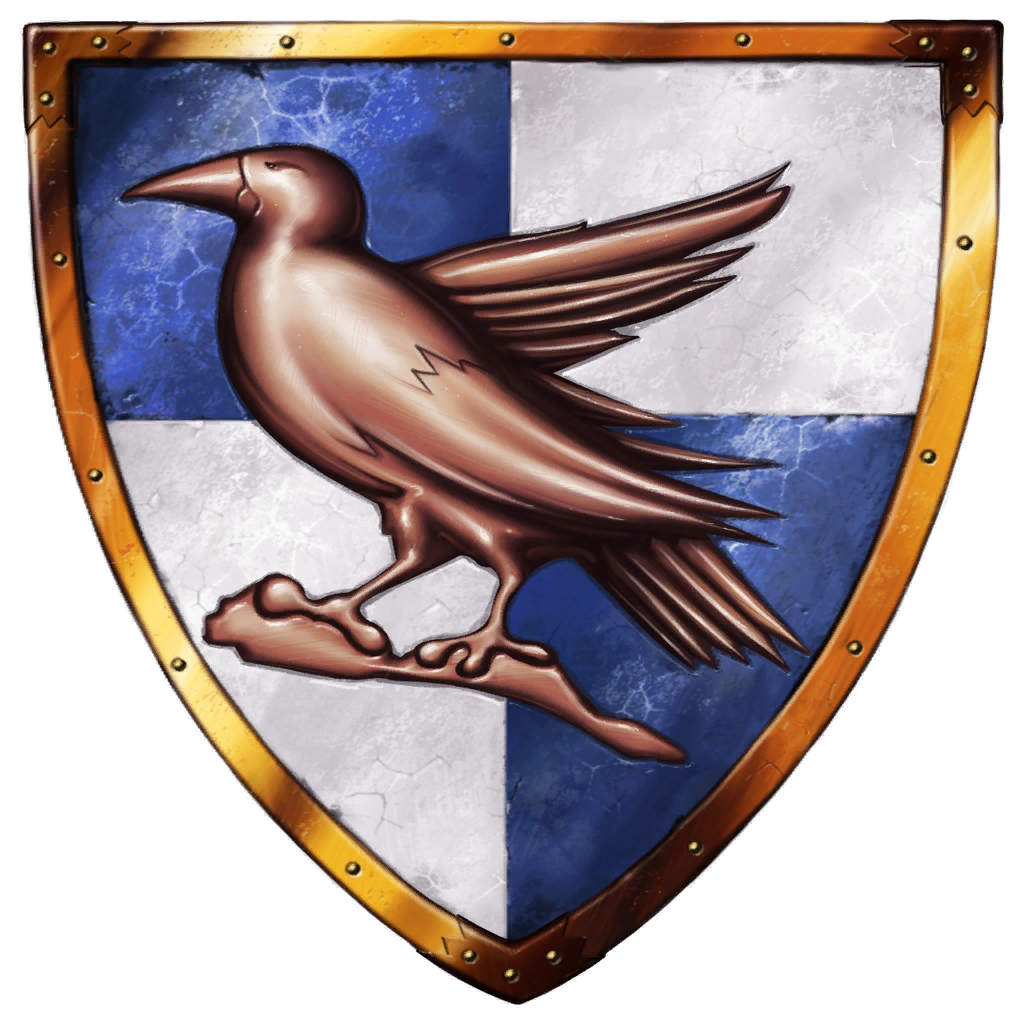
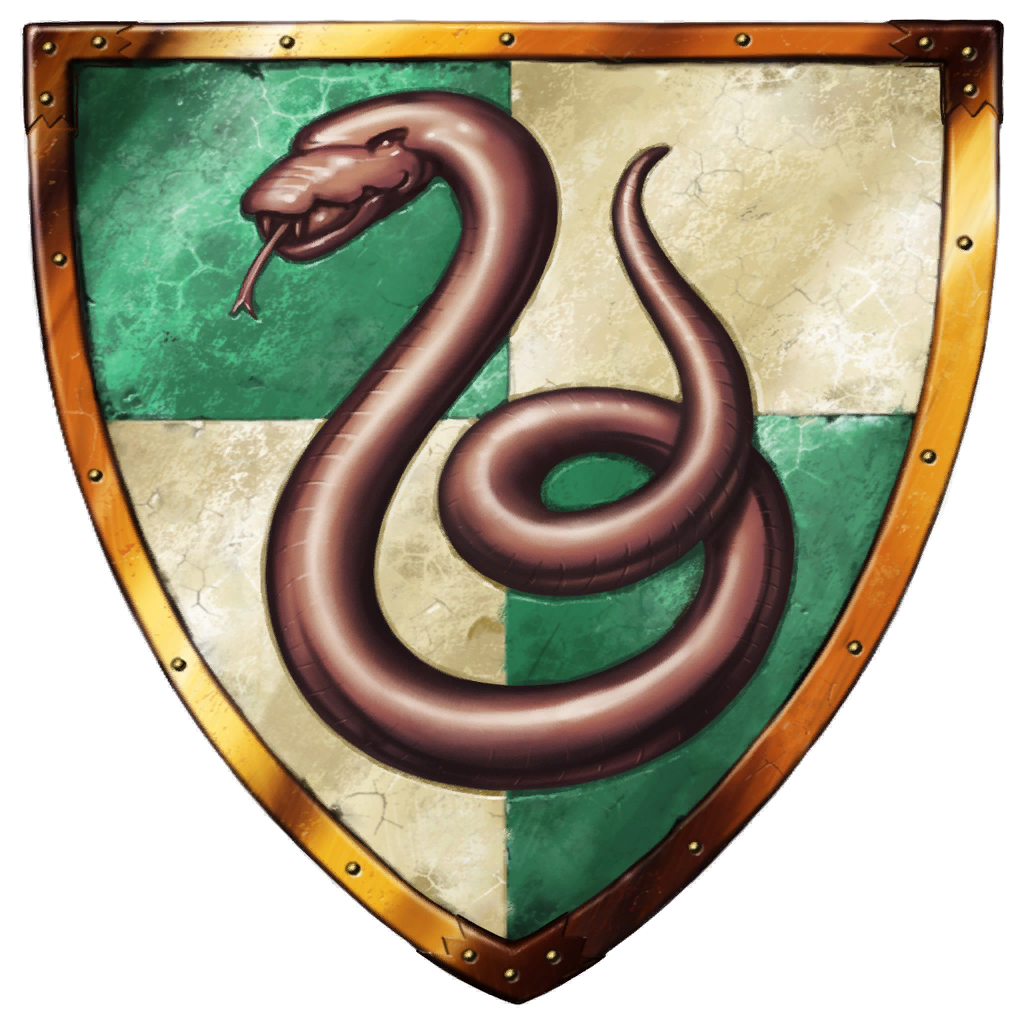
Now on to Harry Potter, which I am currently reading aloud to our boys. Rowling, much like Lewis, is a medieval scholar and has a degree in Classics. Many aspects of the Harry Potter books mirror medieval morality plays, which has been noted by the scholar John Granger. Rowling has also admitted to a lifelong love of Narnia. So, what if she picked up on the astrological themes of Narnia years ago? If you know what to look for the themes are easy to pick up, all the more so if you come from a background of medieval and classical training. She makes many jokes throughout the series on the influence of the stars or divination, which may be her way of hinting at the truth. There are also 7 Harry Potter books, just like the 7 of the Narnia series, which, once analysed, begin to show up distinguishing characteristics of each planet. I'm no literary scholar, and some of the books are more clear than others, but see for yourself:1) Sorcerer's Stone: Jupiter
Harry becomes part of Gryffindor House, which is marked by the color red (Jupiter) and by a lion (king of beasts). Harry also has to fight Professor Quirrell, who with Voldemart incarnated on the
back of his head, becomes a Janus-figure. Jupiter rules over the month of January.
2) Chamber of Secrets: Sun
Harry Potter is rescued by Dumbledore's phoenix, Fawkes. Phoenixes are pictures of the sun and their ashes can turn silver into gold, the metal of the Sun.
3) Prisoner of Azkaban: Mercury
This story is mainly about Sirius Black. Sirius is the name of the "Dog Star," the major star in the constellation Canis Major, which is ruled by Mercury. The children also have to do some stealing in this book (Mercury is the god of thieves), and Sirius makes his escape while flying away on the Hippogriff (like Mercury with his winged sandals).
4) Goblet of Fire: Mars
Mars is characterized by war and strife. This book opens with a mock-war, the Quidditch World Cup, then sees the rise of the Death Eaters, and ends with a battle with Voldemort in the graveyard, whose entrance was the forest of the Labyrinth (Mars is also god of the woods). Also, Ron and Hermione have major romantic strife.
5) Order of the Phoenix: Moon
"Luna" Lovegood is the most important new character in this book, and she is often described as having a "dreamy" look or a "dreamy" voice. The pale light at the Ministry of Magic becomes important at the end.
6) Half-Blood Prince: Venus
Love potions take center stage in this book. Also, it's a bit of a stretch, but the Battle of Hastings took place on a date under the sign Libra, making that England's zodiacal sign. Albus

Dumbledore is a symbol of England (Albus was an ancient name for the island), and this book is mainly about him. Libra is ruled by the planet Venus.7) Deathly Hallows: Saturn
Considering that the classic picture of the god Saturn is Death with a scythe, this one seems a bit more obvious.
There you go. Now I'll just sit by and wait for my book deal offers to come rolling in. Or my Harry Potter Geek badge to come in the mail.
Tuesday, June 26, 2012
Saved from Death
My husband, the teacher that he is, has organized quite a summer school program for our nearly-3rd-grader and nearly-1st-grader. This year they are studying ancient history with them and are beginning at the Beginning.A few weeks ago we read Genesis 5 together and made a chart of the lifespans of Adam's descendents through Noah. We charted when they were born, when they had their children, and when they died. If you've never done this before, I highly recommend it. There are several amazing things you can learn, for example, that Mesuthelah likely died in the Flood (I wonder how long he would have lived if he had been righteous), and that Noah began building the ark about 50 years before his sons were born. Building the ark was clearly a family activity, and his son's wives must have known what they were getting themselves into!
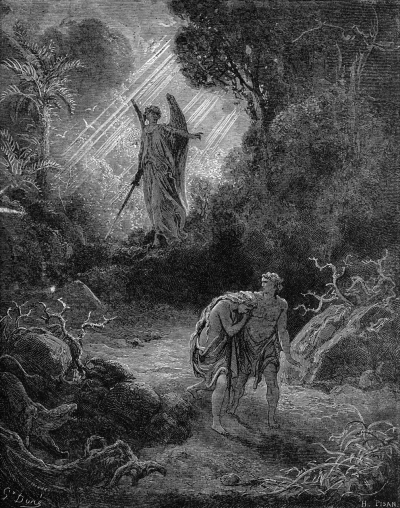
But my husband noticed one detail that had passed me by. Enoch "was not because the Lord took him" (Genesis 5:24) only about 5 years after Adam died. Now, imagine living in the Antediluvian world, and the shock you would feel when the First Man actually died. Here the king of the human race, the Man who came from God Himself has died. Murder had occurred already, but nobody had yet gotten old and died from the Curse.
Now almost immediately following Adam's death, God reaches down and spares Enoch from the curse. Here is a reminder to the world that Death does not have the final say. Even at the realization of their own mortality, God reminded the Antediluvian world that He is still master over Death and the Curse will be undone.
Wednesday, May 9, 2012
A Juicy Piece of Fruit
Sometimes, in being a parent, you feel like you've planted, watered, weeded, and worked for days and days on end. Then, once in a while, you see a massive piece of tasty, juicy fruit hanging from the branches, and it makes all that work worthwhile.
My oldest son's class was discussing how much they were excited for Jesus to return and have the Resurrection. They were excited about the giant feast and party with Jesus, but most of them were upset; "Why does it have to take so long? I wish it was the Resurrection right now!" My son told me that he addressed his friends by saying, "There are so many people in the world, and so many of them are Christians. It must take God a long time to set such a big table!"
Monday, April 2, 2012
Subscribe to:
Posts (Atom)