Tuesday, October 16, 2012

You Think You Have it Bad

I am about halfway through a wonderful book, that I only started 2 days ago.  It's a history of the Dust Bowl by Timothy Egan called The Worst Hard Time.  Very few histories of this time have yet been written, and most likely because the survivors refuse to talk about it.  The author asked one gentleman, now in his 90s, for an interview because he had kept a daily diary of this part in his life.  The survivor agreed, but then shortly saw his wife burning the diary in the fireplace.  When he asked her why she responded, "nobody needs to hear about that time.  It was too horrible to talk about."

He tells an excellent history, most of which I had never known before.  For example, during World War I the Russians were not able to supply Europe with wheat, because of the fighting.  As a consequence, the U.S. secretary of Agriculture, who was Herbert Hoover, set up the first-ever government price-fixing on wheat to encourage Americans to grow more of it.  He set the price unnaturally high ($2.00 per bushel at that time), and everyone started plowing for wheat.  Ranchers converted to wheat farmers, farmers planted entire crops in wheat, even big city types bought farms in Oklahoma, just to plow and plant in wheat fields.  Of course the market was soon glutted, and after the stock market crash of 1929 the price of wheat fell to 20 cents per bushel--less than half the cost of growing it.

As a result, farmers couldn't afford to plow their fields while piles of wheat rotted in barns and at the railroad station.  By this time Herbert Hoover was now president and refused to offer government assistance, because he wanted the free market to fix the problem of the wheat surplus.  The same Herbert Hoover who caused the problem 10 years earlier by government intervention in the market.

The early 1930s brought one of the worst droughts the High Plains had seen in a long time, and since farmers couldn't afford to farm, acres and acres of farmland was left exposed to erosion.  This created the Dust Bowl, which at one point destroyed 13 million of the 16 million acres of farmland in Oklahoma (not to mention the surrounding states).

Most of these High Plains settlers lived in dugout homes, which were essentially holes dug straight into the prairie.  One family of 7 had to share just over 500 square feet of living space.  Although the stock market crash ruined the farmers' finances, most could still subsistence-farm and grow enough food for their own family, until the Dust Bowl hit.  Once the land was destroyed, the farmers also began to starve.  One family with 4 children said they each had their "Dinner Night."  There was only enough food to have one family member eat dinner each night, so they rotated, and once every 4 nights you got to eat.  The worst hard time is certainly a fitting name.

Friday, October 12, 2012

I am Rich.

Republicans want what's best for the middle class.  Democrats want what's best for the middle class.  This argument continues on the same issue, ad nauseum.  This may sound repetitive, since I was posted on this here, but there is no middle class.

The Bible talks about the rich and the poor.  What we call the "middle class" is just an excuse for rich people, who aren't as rich as other rich people, not to have to call themselves rich.  Considering the fact that "middle class" people in the United States usually own their house, a couple of cars, three healthy meals a day (at the very least), and a closet full of clothes to wear, means that they are wildly wealthy compared to most of the world today, and even most people throughout history.  If you cling to the label "middle class," then you can excuse yourself from all the Bible verses that exhort and challenge the rich, especially in regards to their obligation to provide for the poor and be generous with their blessings, because of course that's not you--that's the guy down the street who owns a nicer house with cooler cars.

There is no doubt that healthy societies are those that have a small disparity between the living conditions of the very rich and the very poor, which is what contributes to the idea of the middle class.  But in our current political climate this guise of "helping" the middle class, just promotes the idea that everyone needs the government's help.  The middle class needs the government's help and the poor need the government's help.  Who should complain when the corporation CEO decides that he, too, wants in on the government's help?

Tuesday, September 11, 2012

Expanding Territory

We have entered the fall world of school drop-offs and pick-ups, soccer practices and soccer games.  Still having one little toddler at home makes me remember when our boys were little and my world ran a small orbit around our home.  Naptimes, park days, and library visits were our biggest outings for the week.  Now our solar system has expanded widely to include school and church activities, friend and sport activities.  As I reflected on this, I realized that as our kids continue to get older, their orbits will expand even more--travels, college, employment, and their own families.

I was amazed to see that as a homemaker, my own ministry is growing with their growing sociability.  When they were little, my greatest ministry opportunities included our regular grocery check-out employee and another mom at the park for about 15 minutes.  Now it includes friends and acquaintances through soccer or swimming or school.  Since I am the school secretary, even the toddler girl gets to make more friends than her brothers ever did.  As God grows my children, He grows my opportunity to minister to others along with it.  Lord willing, when they go out into the world, my ministry will graduate along with them, to go into the world.

Saturday, August 4, 2012

Summer of Steinbeck

     We have an extremely small, local library that we've gone to every week this summer, which inhabits a very tiny building that is run entirely by volunteers and donations.  They have a wonderful kids' section, but the adult section looks eerily like your 80-year-old grandmother cleared out all the books she bought in the 1980s and hadn't read.  The "Literature" section in the kids' department is pretty good, and is also about 90% John Steinbeck.  Since living in California, I've realized that everyone raised here became inundated in Steinbeck from school, and yet I can't remember reading one of his books.  At some point in my life I'd read multiple good quotes from Travels with Charley, so I thought I would give it a try, and it was excellent!  I followed that up with a collection of his short stories in The Long Valley, and finally decided to go for the plunge and read Grapes of Wrath.
      To paraphrase another author: "It was the best of books, it was the worst of books."  I've entirely fallen in love with Steinbeck's ability to describe characters and tell a good story.  He really likes his characters, and it shows.  The one-eyed junkyard supervisor is one of my personal favorites.  However, there is definitely some heavy-handed political statements he's trying to make with the story that get oppressive and trite with repetition.  There is no way that one Okie family could encounter every possible event of the Dust Bowl, and the sentimentalism of it is too much for such a good writer.
       Steinbeck's genius can be found in how many times he's been copied over the last 80 years.  It seemed that writers as far apart as Tom Wolfe and Wallace Stegner have copied aspects of his style.  In fact, Stegner is extremely similar, but has even less hope for his characters' unhappy endings than Steinbeck does.
       Steinbeck certainly wasn't a happy character himself--he drank and partied his way through college (which he didn't finish), his first wife was an active Communist who had an abortion because Steinbeck thought being a father would inhibit his writing career.  He neglected his second wife and children, and was possibly happiest with his third wife.  It sounds as though he enjoyed the company of the characters on the page more than those that inhabited his house.  However, his skill is amazing, and I'm looking forward to a visit to the National Steinbeck Center, which is about 20 minutes from my house.

Wednesday, August 1, 2012

From Alfred to Victoria

     Both ancient Hebrew and classical concepts of rural life came together in the founding of the United States.  As many as 90% of the earliest colonists from England were Puritans of the yeomen class, which consisted of free landowners.  This class of English commoners had been raised under the 1,000-year-old English common law written by King Alfred in the 700s A.D., who modeled his private property laws on the Hebrew Old Testament.  They were educated by John Wycliffe and William Tyndale who sought to educate the common farmer by widely distributing the Scripture in the vernacular language.  These Reformers arrived in the New World with their thirst for religious freedom, as well as English property law engrained in their hearts and minds.  Thomas Jefferson, the son of Puritans as well as the Enlightenment, wanted to institute the agrarian ideals of liberty that were espoused by both John Locke and the French Revolutionaries, who took their cues from the classical agrarian revolutionaries.  Jefferson believed that the key to democracy and a moral society lay in the equal distribution of property, and even tried to include such requirements in the Virginia State Constitution.  He found a kindred spirit in James Madison who incorporated agrarianist ideals at the Constitutional Convention, into the Bill of Rights, and in the building of Washington, D.C.  
 
     However, the 19th century saw the beginnings of a break in this ancient, long-standing relationship between productive land ownership and civil rights.  The Industrial Revolution created a society that, for the first time in history, did not have to exist just at or barely above subsistence.  The factory, instead of the home, became the focus of productivity.  Husbands desired the steady paycheck of a factory job, while their wives (who had both servants as well as modern, industrial conveniences), had to justify their lack of productivity in the home.  This situation created Victorian society, wherein the home was transformed into a place of consumption, not production.  In addition, the Romantic Movement reacted to the Industrial Revolution by hailing the beauty of wilderness and naturalism.  The Romantics discouraged farming, viewing it as an activity that imposed upon the inherent beauty and function of nature.  In addition, the creation of the U.S. Department of Agriculture during the Civil War placed more constraints on small, family-owned farms to be financially viable, leading even more farmers to abandon the work of their ancestors and move to the cities. 

Saturday, July 28, 2012

Agrarian Ideas


I've been doing some reading and thinking about agrarianism, and thought I would post a bit of it.

Farming is, quite literally, the oldest profession, Jewish history tells us that the first Man was commanded to be a one (Genesis 2:15).  His job was to care for the Garden of Eden, as well as to look after the animals that populated it (Genesis 2:19-20).  Farming was, once again, the profession of the man who re-populated the world, Noah (Genesis 9:20).  In fact, Noah is called a “husbandman,” which in Hebrew means literally, “a man of the ground.”  Much later, when the Hebrew people left Egypt through the Exodus, Jehovah brought them out from under a cruel tyrant who forced them to work his land, to a land that they owned, that was “flowing with milk and honey” (Exodus 3:8).  He even gave laws guarding private property and ensured that family farms would be handed down throughout Israel’s generations (Leviticus 25).

The classical world also had a high view of farming, but one with more revolutionary connotations.  The Greek poet Homer spoke of farmers in exalted terms and only barbarian monsters, like the Cyclops, did not farm (Odyssey IX. 113-124).  Hesiod, another Greek poet of the same period, says that only warriors, or “Men of Ares” do not work for their bread and that the gods look more kindly on those who make their living from the soil (Works and Days 147).  The Romans, under the tribune Tiberius Gracchus, enacted forced land re-distribution, giving the government the right to take land from the wealthy and re-distribute it amongst free Roman citizens.  This law was called lex sempromia agraria and is where our term “agrarianism” originated, along with its socialistic connotations. 

Tuesday, July 3, 2012

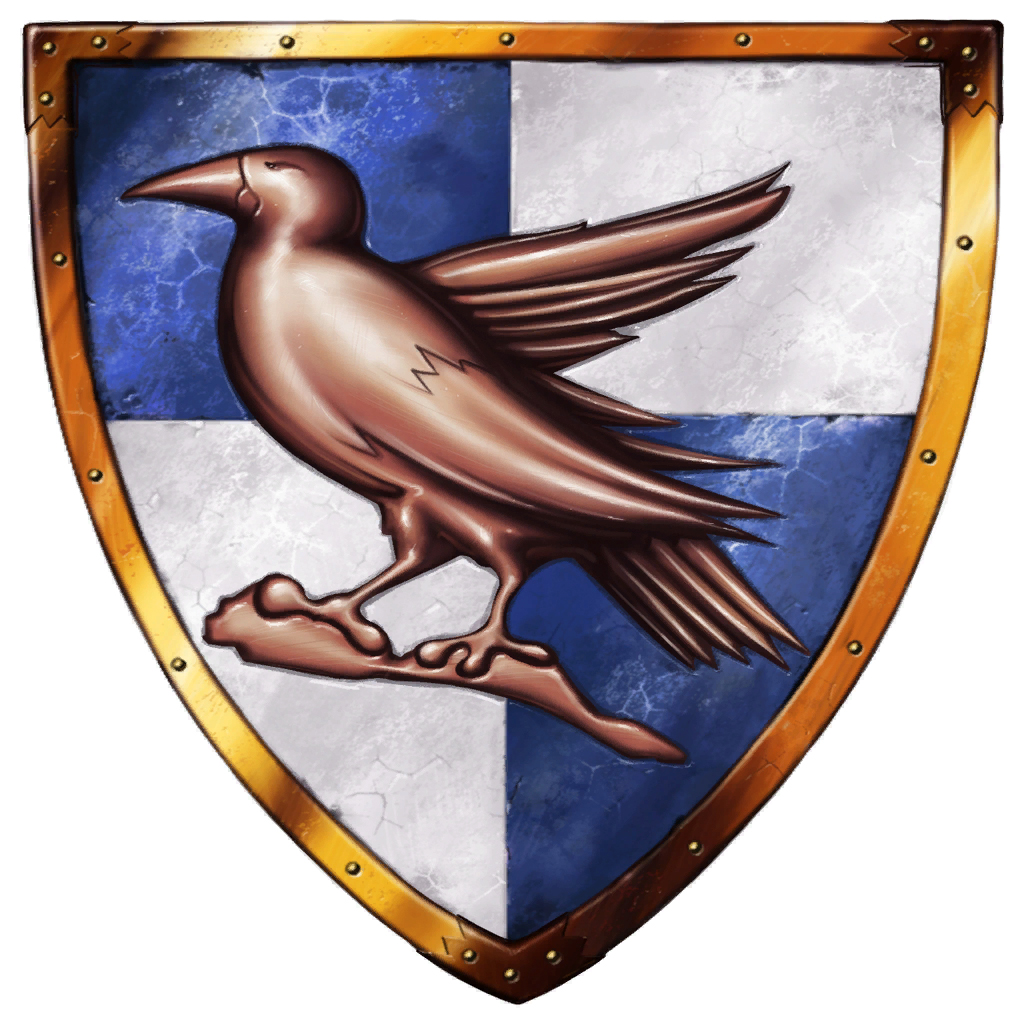
Planet Hogwarts

I enjoy Harry Potter, but would never consider myself a "geek."  However, I think the content of this post will qualify me.  If this doesn't interest you in any way, please feel free to move along.  I won't be offended.

Yesterday I made a discovery in the Harry Potter universe and would like to share it with the world.  I would love to personally ask J.K. Rowling if I'm right, but alas, she seems to keep to herself and only accept the occasional handwritten fan mail (she doesn't even have an e-mail account).  Maybe this post will eventually find its way to her and I can get an answer.

Anyway, this discovery comes from reading two books simultaneously.  First, I am re-reading Michael Ward's Planet Narnia, in which he argues that C.S. Lewis wrote the seven Narnia books as a reflection of medieval cosmology.  The pre-Copernican, geocentric universe viewed Earth at the center which was, in turn, ruled by towering spheres of 7 planets: Moon, Sun, Mercury, Venus, Mars, Jupiter, and Saturn.  At this point in time astrology and astronomy were indistinguishable from one another, and although Christians did not believe that you were fated to follow your horoscope, the material heavens were seen to guide people and events on Earth.  Even Thomas Aquinas believed that they exerted an "influence," although Christians could resist it.  This was how he interpreted the Bible in several points such as "the stars in their courses fought against Sisera" (Judges 5:20).  Ward goes on to say that Lewis used each Narnian book to describe the true God through the "lens" of each planet.  Each one of the books has a different planetary "theme;" for example, The Lion, the Witch, and the Wardrobe is the Jupiter, or Jovial, book.  As the King Planet, there are references to the kingship of Aslan as well as the crowning of the 4 children, just to name a few characteristics. 

Now on to Harry Potter, which I am currently reading aloud to our boys.  Rowling, much like Lewis, is a medieval scholar and has a degree in Classics.  Many aspects of the Harry Potter books mirror medieval morality plays, which has been noted by the scholar John Granger.  Rowling has also admitted to a lifelong love of Narnia.  So, what if she picked up on the astrological themes of Narnia years ago?  If you know what to look for the themes are easy to pick up, all the more so if you come from a background of medieval and classical training.  She makes many jokes throughout the series on the influence of the stars or divination, which may be her way of hinting at the truth.  There are also 7 Harry Potter books, just like the 7 of the Narnia series, which, once analysed, begin to show up distinguishing characteristics of each planet.  I'm no literary scholar, and some of the books are more clear than others, but see for yourself:

1) Sorcerer's Stone: Jupiter
    Harry becomes part of Gryffindor House, which is marked by the color red (Jupiter) and by a lion (king of beasts).  Harry also has to fight Professor Quirrell, who with Voldemart incarnated on the 
back of his head, becomes a Janus-figure.  Jupiter rules over the month of January.
2) Chamber of Secrets: Sun
    Harry Potter is rescued by Dumbledore's phoenix, Fawkes. Phoenixes are pictures of the sun and their ashes can turn silver into gold, the metal of the Sun.
3) Prisoner of Azkaban: Mercury
    This story is mainly about Sirius Black.  Sirius is the name of the "Dog Star," the major star in the constellation Canis Major, which is ruled by Mercury.  The children also have to do some stealing in this book (Mercury is the god of thieves), and Sirius makes his escape while flying away on the Hippogriff (like Mercury with his winged sandals).
4) Goblet of Fire: Mars
    Mars is characterized by war and strife.  This book opens with a mock-war, the Quidditch World Cup, then sees the rise of the Death Eaters, and ends with a battle with Voldemort in the graveyard, whose entrance was the forest of the Labyrinth (Mars is also god of the woods).  Also, Ron and Hermione have major romantic strife.
5) Order of the Phoenix: Moon
    "Luna" Lovegood is the most important new character in this book, and she is often described as having a "dreamy" look or a "dreamy" voice.  The pale light at the Ministry of Magic becomes important at the end.
6) Half-Blood Prince: Venus
    Love potions take center stage in this book.  Also, it's a bit of a stretch, but the Battle of Hastings took place on a date under the sign Libra, making that England's zodiacal sign.  Albus
    Dumbledore is a symbol of England (Albus was an ancient name for the island), and this book is mainly about him.  Libra is ruled by the planet Venus.
7) Deathly Hallows: Saturn
    Considering that the classic picture of the god Saturn is Death with a scythe, this one seems a bit more obvious.

There you go.  Now I'll just sit by and wait for my book deal offers to come rolling in.  Or my Harry Potter Geek badge to come in the mail.